
Fundamentals of Music Processing
See a recent syllabus.
We begin by introducing frequency analysis using the Discrete Fourier Transform, and its commonly used relative, the Short-Time Fourier Transform. From there we study features extraction methods such as chroma analysis and onset detection, and examine analysis tools like dynamic-time-warping and self-similarity matrices. These techniques serve to develop a variety of music analysis applications, including:
-
- Onset classification
-
- Temporal alignment of different renditions of the same music
-
- Automatic chord recognition and key detection
-
- Tempo and beat tracking
-
- Structural analysis of music
-
- Content-based audio retrieval
-
- Music-based audio decomposition
Students practice these techniques with in-class lab exercises and coding assignments in python. Students taking the graduate version (21M.587) complete an independent final project as well.
Prerequisites:
-
- 6.100 or intermediate-level python programming
-
- 6.300 or signals and systems and Fourier transforms
-
- 21M.051 or fundamentals of music theory – reading music and a basic understanding of scales and chords
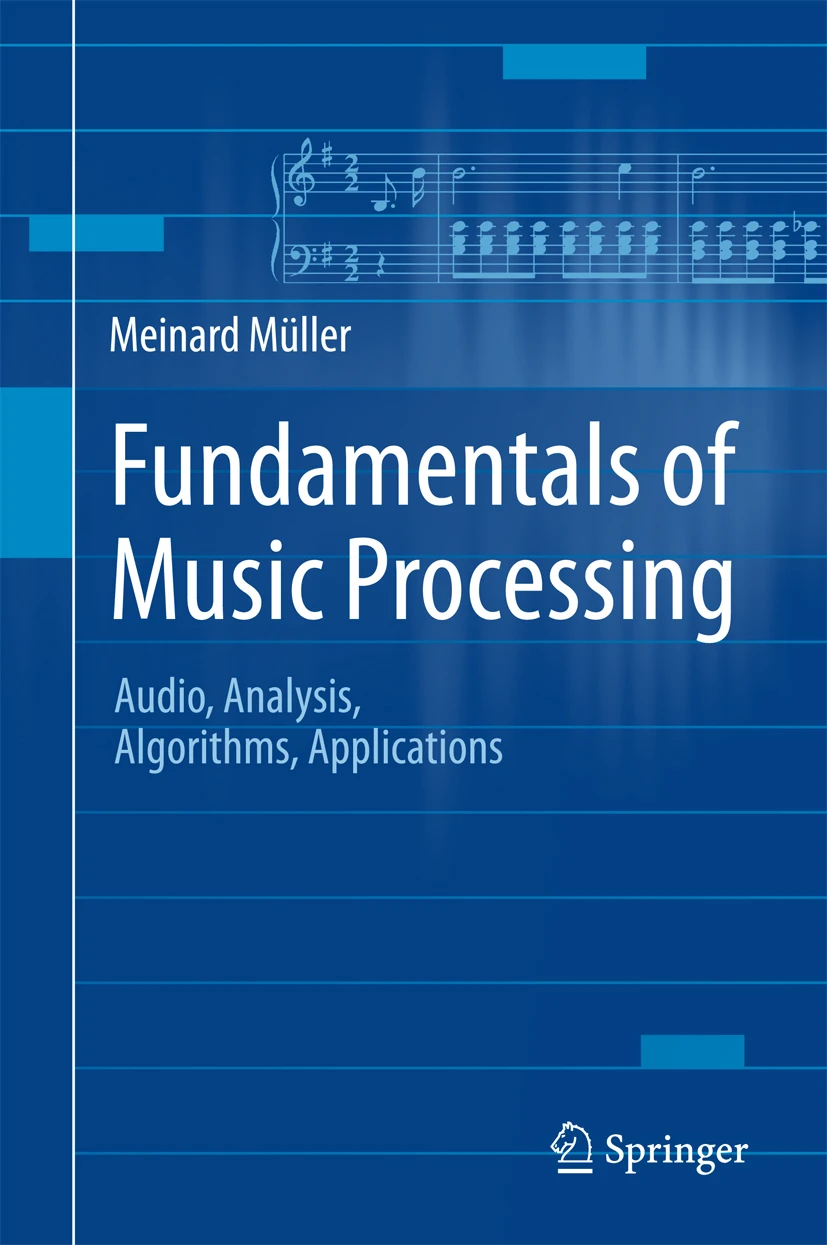
The course requires the textbook, Fundamentals of Music Processing, by Meinard Müller.
Related People

Eran Egozy
Professor of the Practice of Music
Director, Music Technology and Computation Graduate Program